
When Everything Keeps Changing
And you’re tired of pretending you’re “fine with it.”

Trying to live in a constant state of change is like folding a fitted sheet. You can pretend you’ve got it, you can wrestle it into submission, and then it snaps back into its weird little elastic truth.
Change does that. It doesn’t care about your calendar invites or even your taxes.
Speaking of change, I have some news to share with you later this week. A shift that I’ve been working on, which I can’t wait to share with you this Thursday. :-)
But before I do, it sparked something about the story we tell ourselves around change.
Like it really sparked something going on in me, and what I hear all the time, in the world around me right now.
We keep telling ourselves it will settle down after this quarter, after the launch, after the move, after the kid thing, after the health thing, after the relationship thing, after taxes are done. We say it like a promise.
Then life laughs, softly, and adds another tab to the browser.
In business, we dress up and call it strategy. We put it in decks with clean fonts and confident arrows. We act like we’re driving it, when most days it’s more like we’re in the passenger seat, trying not to spill coffee on our lap.
In life, we call it growth, or healing, or a new season. Those words can be true. They can also be ways to avoid saying the simpler thing: I don’t know what’s next, and I want to.
There’s a specific kind of exhaustion that comes from being half-braced all the time.
Like you’re walking through your day with your shoulders slightly lifted, waiting for the next email, the next shift, the next conversation that changes the rules.
You can do that for a while. Your body will let you.
Then your body will send a bill.
One of the great tricks of change is that it makes you think the goal is certainty. If you could just get the answer, you could relax. If you could just see the whole plan, you could breathe.
Certainty is not the prize. It’s the decoy.
The prize is steadiness. Not the kind that comes from everything staying the same, but the kind that comes from you staying with yourself while everything moves.
That sounds lofty. It is also painfully practical.
Because you still have to run the meeting, make the call, ship the work, and show up for the people who need you.
You still have to be a person who eats food, sleeps, and answers texts, even when your mind is spinning like a browser with 30 tabs open, one of them playing music, and you cannot find which one.
Change will keep coming.
Look for the Anchor
I’ve learned to look for anchors that aren’t made of outcomes.
Outcomes are slippery. You can hit the goal and still feel hollow. You can miss the goal and still become more honest, more alive, more true.
Anchors are different. Anchors are what you touch when you can’t control the outcome.
An anchor can be a value you refuse to betray. An anchor can be a daily practice that makes you feel like yourself again. An anchor can be one person you tell the truth to, even when the truth is messy.
It can be a phrase you come back to when you start bargaining with time.
“The trouble is, I think I have time.”
That line lands because it’s deceptive. It interrupts the fantasy. It reminds you that change isn’t only about what’s happening out there, it’s also about what you keep postponing in here.
In business, postponing often looks responsible. You wait until you have more data. You wait until the market settles. You wait until you feel more ready.
Sometimes that’s wisdom. Sometimes it’s fear in a blazer.
I’ve spent enough time over the years working with leaders running high-stakes situations at companies like Netflix, Hyatt, Sony, and MasterCard to see the pattern, and entrepreneurs, too, who feel like everything is on the line.
The ones who struggle aren’t struggling because they lack vision or talent. They’re struggling because they’re trying to control what was never meant to be controlled.
They’re holding onto a strategy that worked last quarter, a team dynamic that felt safe, an identity that fit who they were two years ago.
One of the most useful questions I know is:
“What am I protecting by not deciding?”
Not what am I gaining. But what am I protecting?
Because a lot of our “strategic patience” is really a way to avoid things. If you decide, you lose the dream of the other option. If you choose, you close a door.
And your nervous system hates a closed door.
So what do you do to feel safe? You keep it open. You keep it all possible. You keep it all exhausting.
Am I right?
The Deception of Choice
Before I answer the question you came for, read this part carefully.
In life, it’s the relationship that shifts, the body that changes, the friend who isn’t who they used to be, the parent who ages, the kid who grows into a new person right in front of you.
In business, it’s the platform update, the org reshuffle, the budget cut, the new competitor, the team member who leaves, the client who changes their mind.
It’s also the subtler stuff. The part where you realize you’ve outgrown a role that used to fit. The part where the thing you built no longer feels like home.
This is where people start talking about reinvention as if it were a fun hobby. Like you can just swap outfits.
Reinvention is often a quiet heartbreak.
You let go of an identity that kept you safe. You admit you’ve been performing. You stop pretending you can hold everything together through force of will.
Then we stand there, slightly unarmored.
Here’s what helps, and I say this with love and a little sarcasm:
Stop asking change to be polite.
It’s not going to arrive neatly packaged with instructions. It’s going to show up in the middle of your day, usually when you’re already running late.
So build a way to meet it that doesn’t rely on your mood.
Make your own simple protocol.
When something shifts, name it. Don’t dress it up. Just name it.
The Answer
Start asking yourself what this is needing from me right now: action, patience, a conversation, rest, a boundary, a decision, an apology, a goodbye.
And then do the smallest honest thing you can do today.
Small is underrated, says our mind. Yet small is how we keep moving without turning our lives into a dramatic renovation show.
This matters everywhere more than most people admit. We are told at a young age (and as leaders) to be steady and confident.
Nobody says, out loud, that it’s also just managing your own internal weather while other people are watching.
If you’re a human, your nervous system is contagious.
If you’re a leader, your team can feel when you’re pretending. They can feel when you’re spinning. They can feel when you’re grounded.
Being grounded does not mean unbothered.
It means you’re telling the truth about what’s happening, and you’re not making everyone else carry your denial.
Pick one anchor that is not negotiable. One practice, one person, one truth, one boundary.
Pick one place where you stop performing certainty and start practicing.
This week’s challenge for you:
Pick one tiny risk you will take this week that makes your life more honest. A conversation you’ve avoided. A decision you’ve delayed. A simplification you’ve resisted because your ego likes complexity.
Then watch what happens inside you when you do it.
Change doesn’t slow down when you get better at living. It speeds up, sometimes, because you stop wasting energy on pretending. You stop dragging your feet.
You fold the fitted sheet the best you can, you shove it in the closet, and you go live your actual life.
That’s the whole thing.
Stay human,
-Bryan
P.S. If this feels familiar, you don’t need motivation. You need a quieter place to look at it. That’s the work I do.
I’ll see you on Thursday, ready to share the change I made.
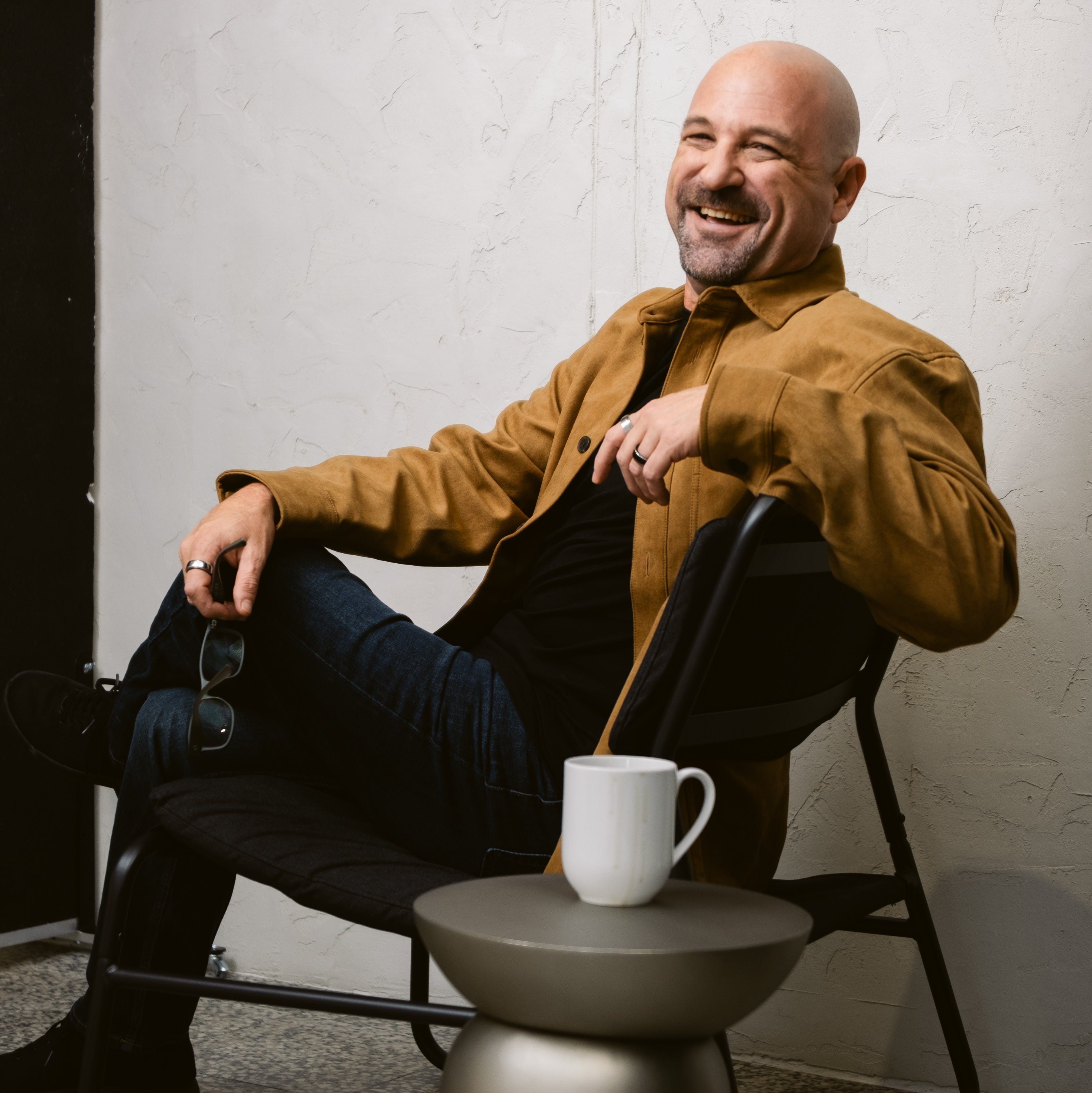
I’m Bryan, and if you’re an owner-operator or executive ready to update your human operating system, pull up a chair. Fancy stuff: Built companies. Gave a TEDTalk. Keynoted 200+ times. Crashed hard. Found my way back. Lost 85 lbs. Ditched diabetes. Moved to Lisbon. And as it turns out, you can operate differently at any age.
Top Recent Popular Posts:
The Pipes We Can’t See - Built on the invisible
Main Character Syndrome - Your life is not a supporting role
10 Days of Silence - What I learned from a 10-day silent Buddhist retreat in Macedonia
The Currency of Being Liked - Choosing yourself in a world that profits from doubt
One of your very best.