
Drop the Distance
The case for subtraction

Harry Beck wasn't asked to fix the London Tube map. He was just out of work, and it bothered him.
He had been a draughtsman for the London Underground, the one who drew the electrical wiring diagrams. Tidy lines. Right angles. No wasted ink. Between jobs, he turned that eye on the Tube map, which at the time was a mess.
Stations plotted to true geography, crammed together in the center, flung far apart at the edges, laid over the streets of London like a tangle of dropped string.
Beck looked at it and did something close to heresy.
He threw away the distances.
He decided riders didn’t care how far apart two stations really were. They cared about one thing. Which stop is next, and where do I change trains.
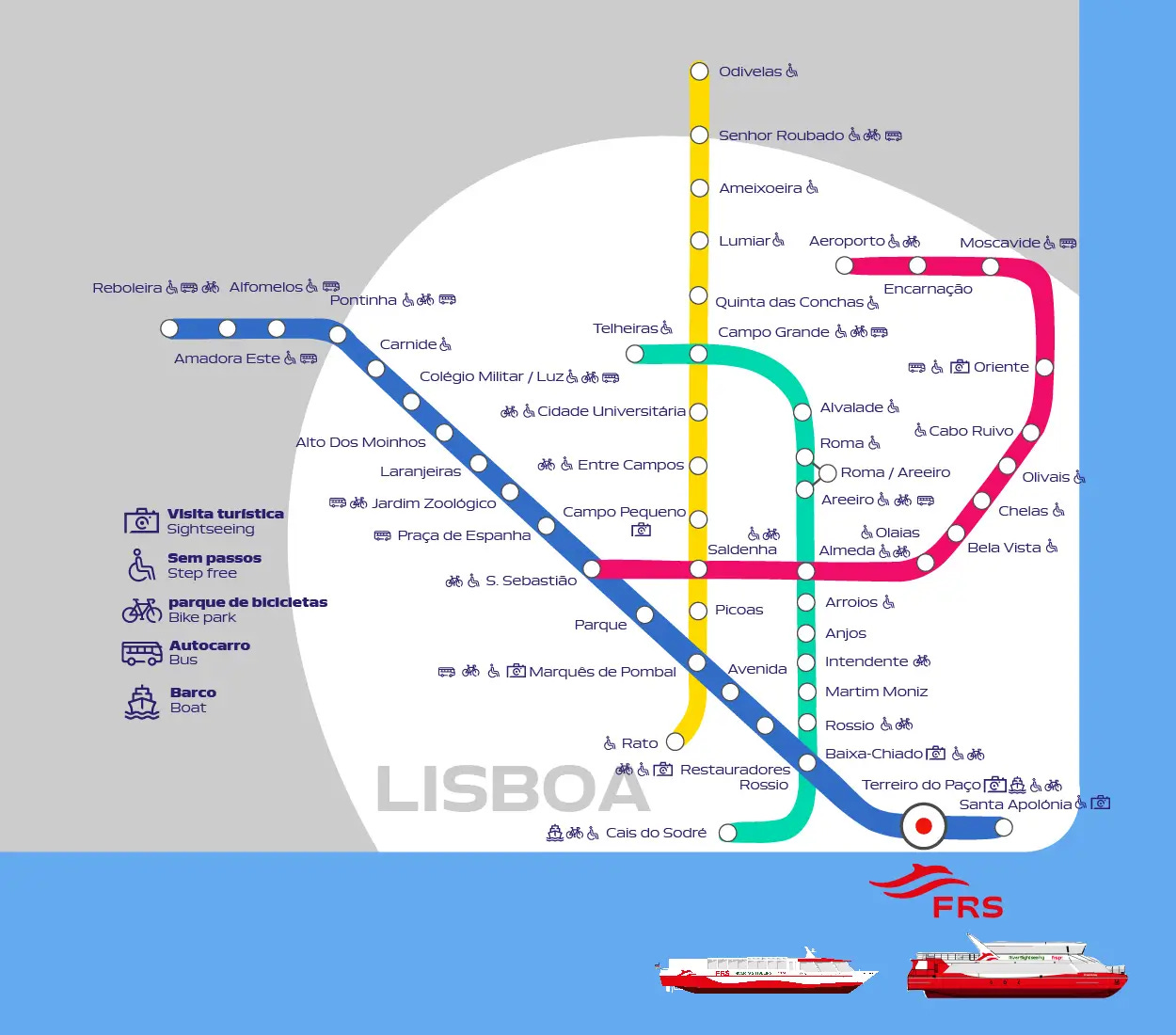
So he straightened every line to a vertical, a horizontal, or a 45-degree diagonal. He spaced the stations evenly, whether they sat a quarter mile apart or ten. He deleted the geography of an entire city and kept only the connections.
The Underground rejected it. Too radical, they said. A map that doesn’t show real distance isn’t a map.
He didn’t quit. He brought it back the next year. They printed a trial run in 1933 to humor him.
It was so popular they had to reprint within a month, and within a generation it had become the template for nearly every transit map on earth. He was paid five guineas. Call it a few pounds.
Beck made the most useful map in the world by removing the one thing every map was supposed to have. The distance.
What was left was the only thing anyone needed. How it all connects.
We forgot this.
The Block You Stack
Here's how it shows up. A researcher was building a Lego bridge with his three-year-old son. The two towers were uneven. Dad reached behind him for an extra block to build up the short side. His toddler had already pulled one off the tall side. Level. Done. The kid saw it in a second. The engineer reached for more.
Researchers at the University of Virginia ran eight experiments testing exactly this. Lego structures. Grids. Recipes. Travel plans. Over and over, people added.
Subtraction barely crossed their minds, even when removing was faster and cheaper.
That’s us. That’s the whole thing.
We are wired to add. The answer that says remove almost never gets a vote.
This is subtraction neglect. We don’t reject the simpler fix. We don’t take a moment to notice it. And it gets worse the more tired and loaded down we are, which is to say it gets worse at the exact moment we need it most.
The Squeeze
Almost every leader I work with is being asked to do the same thing.
Do more with less.
Fewer people. Smaller budget. The same number to hit, or a bigger one. And it always ends on the word efficiency, like a lever someone forgot to pull.
What I’m hearing: “they cut a third of the team and kept all of the work with nothing removed.”
Everything then lands on whoever’s left, on their nights, their weekends, the dinners they are missing. Those people burn out and go, and now you have even less.
There’s a second half to that sentence: Do less.
If you take away a third of anything, something has to give. And saying AI will fill the void right now is a crutch.
The job isn’t to rally the survivors to run faster. Instead, decide as a team, what your boundaries are and hold them, together.
Kill the report no one reads. Cancel the meeting that exists to prep for the meeting. End the project everyone’s been protecting.
Saying no feels like you’re failing the mandate, as you quietly die inside.
Exactly backwards. Your team can’t take things off the list until you empower them or yourself. “We’re not doing this anymore” isn’t you dropping the ball. It’s you choosing which balls are worth catching.
The survivors don’t need a pep talk. They need a revised focus.
What I Removed
I know this one in my body.
A few years ago Courtney and I removed almost all of our physical things. We sold everything we owned down to 13 bags, and started over in Lisbon with a fraction of stuff. I guess you could call it downsizing. It felt more like dropping the distance.
The reflex never fully dies. I still catch myself reaching for more.
New tool, new system, new computer cords and chargers. I moved to Lisbon to simplify my life and somehow ended up with a junk drawer within six months.
Be the One
Beck’s map still hangs in every Tube station in London. Almost a hundred years later, half the planet finds its way through strange cities on maps built from his one stubborn idea.
He didn’t draw more detail. Instead, he drew a smaller, truer one, and he got there by deleting almost everything.
Not smarter. Just clearer. You see the noise keeping the important work from moving. Be the one to say the hard truth.
While I wrote this for you, I'm not done removing things either.
Stay human
- Bryan
P.S. I have one go-to for all of this. It’s called the Triangle of Clarity, distilled into what to drop, and where to aim. Take a look here.
I’m Bryan, and if you’re a leader or executive, pull up a chair. Fancy stuff: Built companies in Silicon Valley. Gave a TED Talk. Keynoted 200+ times.
Crashed hard. Found my way back. Lost 85 lbs. Ditched diabetes. Moved to Lisbon. And as it turns out, you can operate differently at any age.
Now I work with leaders and teams who’ve proven themselves but know something needs to shift.
Popular Posts:
Connected Detachment - The looser the grip, the longer it lasts.
Main Character Syndrome - The scene starts when you walk in.
10 Days of Silence - I stopped speaking for ten days. The noise I found was mine.
Love this!
Harry’s story took me back 20 years to when I moved to Spain and began teaching English.
Similar to Harry’s radical move to simplify the London Tube Map, I created a simpler model for become a clear and confident communicator in English, that was considered a little radical at the time.
While academies and students were adding more and more ‘branches’ (complexity) to learning English, I instinctively went to the ‘roots’ (the fundamentals) that I felt were being ignored.
Like Harry, I received my share or ridicule 😞 but those who defied the traditional path and followed me, convinced me to keep going and also to put what I was teaching into a book. I’m so happy I did 😃
You Can Do it! El último empujón a tu inglés continues to help
many to confidently defend themselves in the global (English) market.
By incorporating that ‘revised focus’, you speak of, Bryan, they cut away complexity and concentrae their time and energy on the ‘roots’ that make the tree stand strong and tall.
Your insight always inspires me. And I need to draw myself a map for what connects, and not how far it is.